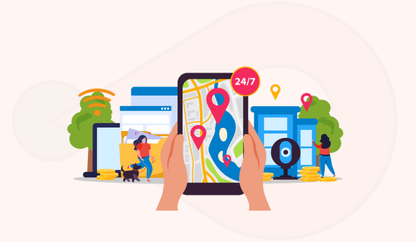
If you run a business that serves customers in a specific area, a dental clinic, a restaurant, a law firm, or a maintenance agency, the most valuable spot on Google is not the number one organic result. It is one of the three map listings that appear above it. That cluster is called the Google Map Pack, and it is where local buying decisions actually happen.
When someone searches “dentist near me” or “web design agency in Mumbai”, Google serves up a map and three featured businesses before any blue link. Most users never scroll past those three. Industry studies from BrightLocal and others consistently show that map pack listings capture a disproportionately large share of local clicks, calls, and direction requests, often more than positions one through ten organically combined.
In this guide, I will walk you through exactly how to earn a place in the map pack. We will cover the three ranking factors Google actually uses, a clear step-by-step playbook, and the common mistakes that quietly sabotage local businesses. This is the same process we follow at Aarav Infotech when helping clients improve their Google Map Pack ranking across India, the UK, and the US.
There are no shortcuts. But there is a repeatable method. Let’s walk through it.
The Google Map Pack, also called the Local Pack or 3-Pack, is the block of three business listings Google displays alongside a map whenever a search has local intent. It typically appears near the top of the page, directly under ads and sometimes under an AI Overview.
You will see the Map Pack for queries like “coffee shop near me”, “plumber in Pune”, or “best SEO agency Bhubaneswar”. Google only triggers it when it believes the user is looking for a physical place or a location-specific service.
• It sits above organic results, so it commands most of the attention.
• Each listing shows reviews, hours, distance, and a call button, everything a buyer needs to act.
• Being in the pack often leads to more calls and direction requests than even the top organic result.
• It is free to compete with no paid ads required.
Google has been unusually transparent about local ranking. The system is built on three factors: Relevance, Distance, and Prominence. Every optimisation you do should ladder up to one of these.
How well does your business profile match what the searcher typed? If someone searches “water purifier repair” and your profile says “plumbing services” without mentioning water purifiers anywhere, you lose. Relevance is controlled by your categories, business description, services list, and the keywords in your reviews and posts.
How close your business is to the person searching. Google will not show a pizzeria in Delhi to someone searching from Mumbai unless there is no better match available. You cannot change your address to game this, and you shouldn’t try, but you can structure your service area and website to target the right geographies around you.
How well-known and trusted your business is. Google pulls this from across the web: reviews, ratings, mentions in news articles, links from reputable local websites, citations in directories, and the general authority of your domain. Prominence is the slowest factor to improve, but also the hardest for competitors to copy.
|
Factor |
What It Measures |
What You Control |
|
Relevance |
Keyword match between profile and query |
Categories, description, services, reviews |
|
Distance |
Proximity between the business and the searcher |
Address, service area, location pages |
|
Prominence |
Overall trust and authority of the business |
Reviews, citations, backlinks, mentions |
Work through these eight steps in order. Skipping the foundational ones to jump ahead is the most common mistake I see in audits.
Your Google Business Profile, formerly Google My Business, is the single most important asset in local SEO. It is free, but most businesses leave 40–50% of the available fields blank.
• Claim and verify your profile. Unverified listings rarely rank.
• Fill in every single field: hours, phone, website, attributes, services, products, and opening date.
• Choose the most specific primary category available. “Indian restaurant” beats “restaurant”. “Website designer” beats “marketing agency”.
• Add up to 9 secondary categories that genuinely describe what you do. Don’t stuff irrelevant ones; Google will catch it.
• Write a natural business description that includes your main service and location in the first two sentences.
NAP stands for Name, Address, Phone. These three details must be identical across your website, GBP, social profiles, and every directory you’re listed in. Even small differences, “St.” versus “Street”, or a different phone format, can confuse Google’s trust signals.
• Pick one canonical format and document it. Share it with your team.
• Use a single phone number across all platforms. Avoid tracking numbers that don’t match your GBP.
• Audit old listings. Closed branches, outdated suite numbers, and abandoned landline numbers all cause inconsistency.
Reviews are one of the most powerful prominence signals Google uses. Quantity matters, but recency and keyword diversity matter just as much. A business with 50 recent reviews that mention specific services often beats one with 300 generic reviews from two years ago.
• Ask every happy customer. Make it easy: a direct GBP review link, a QR code at the counter, and a post-service email.
• Never gate reviews. Filtering for only 5-star requests before sending the link violates Google’s policies and gets listings suspended.
• Respond to every review, positive and negative. Responses signal engagement and help you insert natural keywords.
• Stay well clear of fake reviews. Google’s detection has become aggressive, and one wave of removals can tank years of work.
Listings with fresh photos get more clicks, calls, and direction requests than stale ones. Google rewards that engagement.
• Upload real photos of your team, premises, products, and work in progress. Stock photos are obvious and hurt trust.
• Add at least 2–5 new photos per month on active profiles.
• Include your logo and a strong cover photo that represents the brand.
• Geo-tag photos before upload when you can. It is a small signal, but it compounds.
A citation is any online mention of your business name, address, and phone, whether or not it links to your site. Directories like Justdial, Sulekha, IndiaMART, Yelp, Bing Places, Apple Maps, and industry-specific directories all count.
• Start with the top 10–15 directories in your country. In India, that means Justdial, Sulekha, IndiaMART, Tradeindia, and industry bodies.
• Keep NAP identical everywhere. A single tool like BrightLocal, Whitespark, or Yext can help you track and manage listings at scale.
• Prioritise category-specific directories over generic ones. A listing on a respected trade directory often outranks dozens of generic ones.
Your GBP does not rank in isolation. Google cross-references your profile with your website, and a strong local website amplifies everything else.
• Add your NAP in the footer of every page.
• Build a dedicated location page for each city or service area you operate in with unique content, not copy-pasted boilerplate.
• Use LocalBusiness schema markup with your NAP, hours, geo-coordinates, and services.
• Include local keywords naturally in page titles, H1S, and body copy.
• Embed a Google Map on your contact page pointing to your verified address.
Backlinks from trusted local sources are powerful prominence signals. A link from your city’s chamber of commerce or a respected regional newspaper is worth more than a dozen generic directory links.
• Partner with local organisations, schools, and charities where you can genuinely help.
• Get listed on your local chamber of commerce and trade associations.
• Pitch local news outlets with genuine stories, a new opening, a community initiative, or a local award.
• Sponsor small local events and ask for a link on the event website.
Google Posts are mini-updates that appear on your profile. Offers, events, announcements, and product highlights all qualify. Regularly posting signals an active, living business.
• Publish at least one post per week on active profiles.
• Use clear photos and a simple call-to-action button (Call, Book, Learn more).
• Answer every question that appears in the GBP Q&A section; don’t leave them to randoms.
Once the basics are in place, these advanced levers separate consistent top-3 listings from occasional ones.
Google watches what users do after seeing your listing. Clicks, calls, direction requests, website visits, and photo views all feed back into ranking. A compelling cover image, a sharp description, and clear CTAs measurably improve these signals.
You cannot fake your address, but you can think about it strategically when choosing a location for a new office. Businesses closer to the commercial centre of their target area typically rank more consistently. If you operate across multiple cities, opening genuine offices or studios in each, virtual addresses are a violation that leads to suspension.
Before uploading photos, embed GPS coordinates and meaningful filenames. Instead of IMG_4523.jpg, rename it mumbai-office-reception.jpg. The impact is small per photo but meaningful across a full profile.
If you serve customers at their location rather than yours (plumbers, mobile repair services, field consultants), set up a Service Area Business correctly. Specify the exact cities and postal codes you cover. Don’t claim all of India; it dilutes relevance and looks suspicious.
• Inconsistent NAP across directories and social profiles.
• Buying or soliciting fake reviews is the fastest way to get suspended.
• Stuffing keywords into the business name (“Acme Plumbing Best Plumber in Delhi 24/7”). This violates Google’s naming policy.
• Ignoring your profile for months. Inactive listings quietly lose ranking.
• Using a virtual office or PO box as your registered address.
• Leaving negative reviews unanswered. The response is often read more carefully than the review itself.
• Creating duplicate listings for the same location under different names or phone numbers.
|
Do |
Don’t |
|
Verify your GBP and complete every field. |
Leave fields blank or leave the listing unverified. |
|
Pick the most specific primary category possible. |
Choose vague, generic categories. |
|
Keep NAP identical across every platform. |
Let old or inconsistent listings sit unmanaged. |
|
Ask happy customers for honest reviews. |
Buy reviews or gate them for 5-star requests only. |
|
Respond to every review, good and bad. |
Ignore negative reviews or get defensive. |
|
Post weekly updates and add fresh photos. |
Let the profile go stale for months. |
|
Use your real address and genuine service area. |
Use PO boxes, virtual offices, or fake locations. |
Here is the pattern we consistently see when we take on a local SEO engagement for a service business over 90 days. Figures below reflect a typical well-executed optimisation; individual results vary with category, competition, and starting position.
|
Metric |
Before |
After (90 days) |
|
Map Pack visibility (primary keyword) |
Position 12–18 |
Consistent top 3 |
|
Monthly GBP calls |
34 |
71 |
|
Monthly direction requests |
48 |
119 |
|
Website clicks from GBP |
112 |
268 |
|
Review count |
23 (4.1★) |
58 (4.6★) |
The work was methodical, not magical. We completed every GBP field, cleaned up 11 inconsistent directory listings, restructured the category selection, launched a simple review request process, and published one weekly post. No paid ads. No tricks. Just disciplined execution of the eight steps above.
This is the question every business owner asks, and the honest answer is: it depends. Here is the realistic timeline from the work we do.
Claim and verify the profile. Fix NAP across major directories. Complete every field. You will see small movements in impressions almost immediately.
Review collection kicks in. Citations from core directories begin to index. Photos and posts build engagement signals. Rankings for long-tail local keywords typically improve first.
For most service categories, 60–90 days is when you see movement into the top 10 and sometimes into the top 3. Competitive urban categories (lawyers, dentists, plumbers in Tier 1 cities) often take longer, 4 to 6 months of sustained work.
Prominence is a compounding signal. The longer you consistently maintain the profile, collect reviews, build citations, and publish posts, the harder it becomes for competitors to overtake you. Most of our long-term clients see their most stable top-3 positions after the 6-month mark.
Print this, hand it to whoever manages your marketing, and tick each box before declaring your local SEO “done”.
1. GBP claimed and verified.
2. Primary category is the most specific one available.
3. All secondary categories are genuinely relevant.
4. Business description mentions the main service and location.
5. Every hour, phone, address, and attribute field completed.
6. NAP identical across website, GBP, and top 10 directories.
7. LocalBusiness schema implemented on the website.
8. Location pages exist for every area served, with unique content.
9. At least 30 recent, real reviews with a 4.5+ average.
10. Every review (positive and negative) has a response.
11. New photos are uploaded at least twice a month.
12. Google Posts are published at least weekly.
There are no instant results, but you can accelerate the process by claiming and fully optimising your Google Business Profile, fixing NAP consistency across directories, collecting 10 or more recent genuine reviews, and publishing weekly Google Posts. For most service businesses, meaningful Map Pack visibility appears within 8 to 12 weeks of consistent optimisation.
Yes. Google Business Profile (formerly Google My Business) is completely free to set up, verify, and maintain. You only pay if you choose to run Google Ads or Local Service Ads on top of it. The organic Map Pack itself costs nothing.
Yes, strongly. Review quantity, recency, average rating, and keyword diversity are all prominence signals Google uses. Responding to every review also sends a positive engagement signal. Avoid fake reviews — Google’s detection has become aggressive and violations can lead to listing suspension.
The most common reasons are: the profile is unverified, categories are incorrect or too generic, NAP is inconsistent across the web, you have too few recent reviews, or your business is outside the searcher’s distance radius. An audit of these five areas usually identifies the problem.
There is no magic number. However, most businesses in competitive categories need at least 25–50 recent reviews with a 4.5+ average to be competitive. In less competitive categories or smaller cities, 10–20 quality reviews are often enough to reach the top 3.
Yes. Your website is a major ranking signal for both relevance and prominence. A fast, well-structured site with LocalBusiness schema, city-specific location pages, and strong local backlinks makes your GBP much more likely to rank. The two work together; you cannot succeed in the Map Pack with a weak website.
Yes, if you run a Service Area Business such as a plumber, electrician, or field consultant. You can hide your home or office address and instead specify the cities or postal codes you serve. You still need a verified address for Google, but it won’t be publicly displayed.
The Google Map Pack is the highest-leverage real estate on the local search page. Ranking in it brings more calls, more direction requests, and more walk-ins than almost any other digital marketing investment a local business can make. And unlike paid ads, it keeps delivering long after the work is done.
The method is not a secret. Claim and optimise your Google Business Profile. Fix NAP. Collect genuine reviews and respond to all of them. Build citations and local backlinks. Keep the profile active. Do the work consistently, and your position in the pack will compound over months, not days.
The honest part: no one can promise you a specific ranking by a specific date. Google’s local system is context-sensitive and always shifting. What I can promise from experience is that businesses that treat local SEO as a discipline, not a project, consistently outperform those that don’t. If you want a deeper audit of where your listing stands today, our team at Aarav Infotech handles local SEO as part of our website maintenance and management services. Share this guide with whoever owns your marketing, and if you have questions, get in touch.
For official reference, the Google Business Profile Help Centre and Google Search Central are the two resources I keep open on every local SEO audit.
About the author: Jitendra Raulo is the Founder & CEO of Aarav Infotech, a global digital services company specialising in website maintenance, local SEO, web accessibility (WCAG/VPAT), and web performance optimisation. He has been building production-grade web platforms for over 15 years.
Jitendra Raulo is the Founding Director at Aarav Infotech India Pvt. Ltd., a leading Web Design and Digital Marketing Company with 11+ years of experience and having headquarter in Mumbai, India, and Support Centre at Bhubaneswar, India, he is actively working with Start-ups, SMEs and Corporations utilizing technology to provide business transformation solution.
All author postsLearn practical ways to improve your local visibility and rank higher in Google Map Pack for more ca...
A slow website can silently drive visitors away before they convert. Page speed affects user experie...
Learn how to optimise your content for Google Search Generative Experience (SGE) by improving topica...
AI is transforming SEO in 2026 by shifting focus from keyword rankings to intent, authority, and AI-...
Your digital foundation, fortified by our guardians.
 +91 8008100192
 +1 (855) 650-4040